
Place the goshintai for home for your goshinkyo (altar).
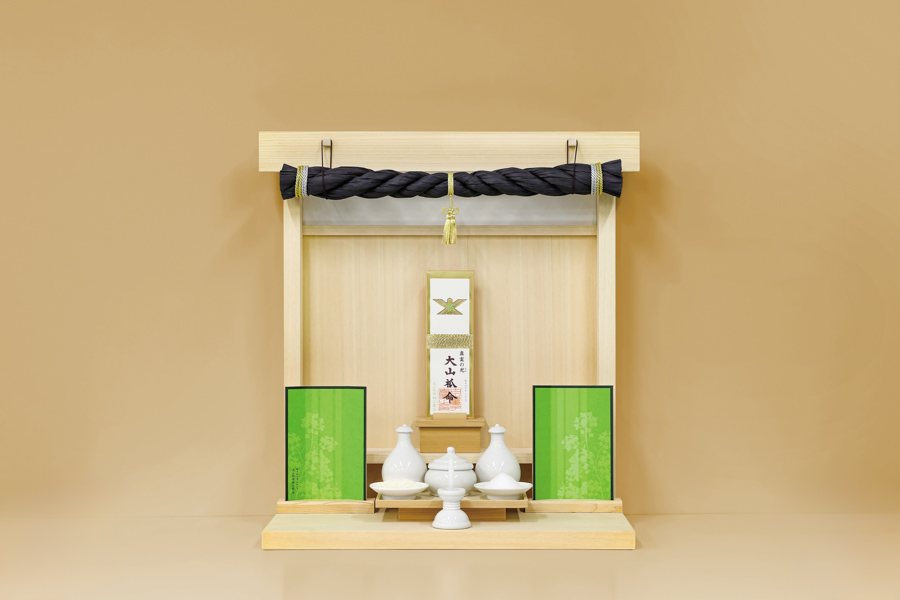
How to Set it Up
Goshinkyo should be set up in a place where the family gathers. You may
use a specially designed goshinkyo that can be purchased from the
church or simply use a single wooden board (of any material or size). Ideally,
position it facing south, east, or a direction between the two; place it higher
than eye level when seated in seiza posture (Japanese style sitting), ensuring
the location allows for easy, daily cleaning. Avoid placing it directly above
doorways or passageways.
To properly enshrine the goshintai (the sacred object embodying the
shared spirit of Kami), it is important to show due reverence by
arranging kankazari and shimekazari (ornaments) and preparing
offerings. Aim to thoroughly clean the sacred space and replace the decorations
around December 15th—the day the Seikon no Gi is held—to prepare for
welcoming the new sacred object.
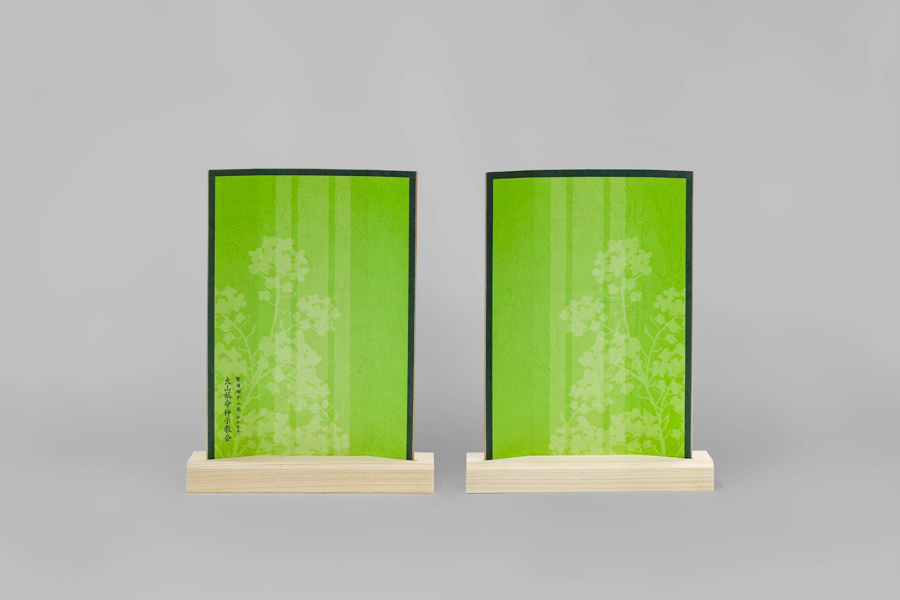
Kankazari
The unchanging color of the rapeseed leaves—retained from the seedling
stage—symbolizes Kami’s steadfast desire for peace.
* The kankazari (ornament) for the coming year is available for
purchase starting September 23rd of the previous year.
* The stand for the ornament is reusable; please replace only the ornament
itself each year.
* Once the ornament is removed, please dispose of it at home.
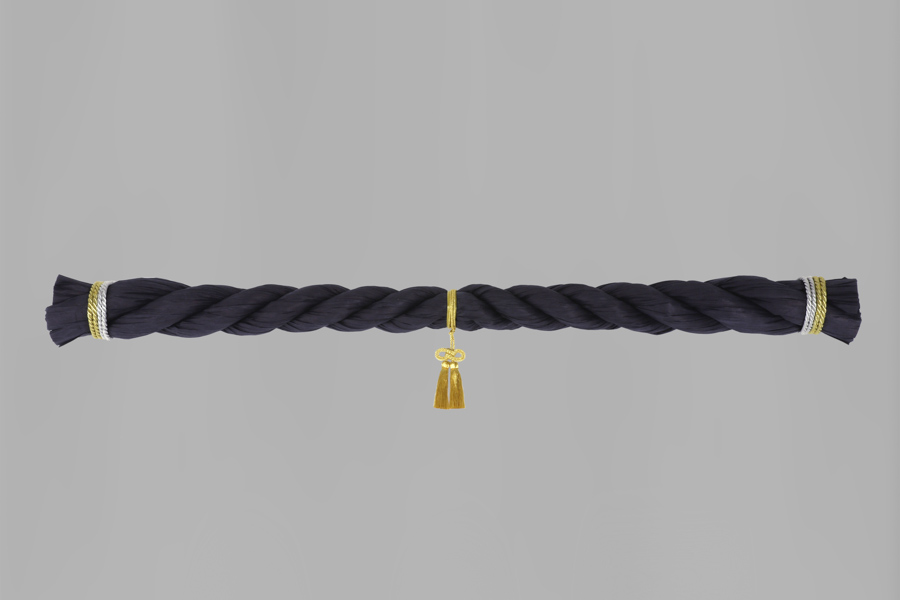
Shimekazari
Gold and silver accents are interwoven with the color Shinshi (a deep,
sacred
purple representing Shinkon) to signify a purified space where the
sacred object is enshrined.
*Shimekazari (straw ornament) are available in three sizes: Size 1
(approx. 50
cm; fits the new-style goshinkyo), Size 2 (approx. 70 cm; fits the
old-style goshinkyo), and Size 3 (approx. 100 cm).
*Once removed, please dispose of the ornament of it at home.
Click here for instructions on how to install shimekazari (Japanese version only).
Offerings
Offerings representing specific principles are placed before the goshintai. Sake, washed rice, and salt should be replaced with fresh supplies regularly—ideally once or twice a month—or whenever they become damaged or spoiled. Additionally, when opening a new package of these items, offer them with a kokoro full of gratitude. The vessels used for the offerings should be washed whenever the contents are replaced.
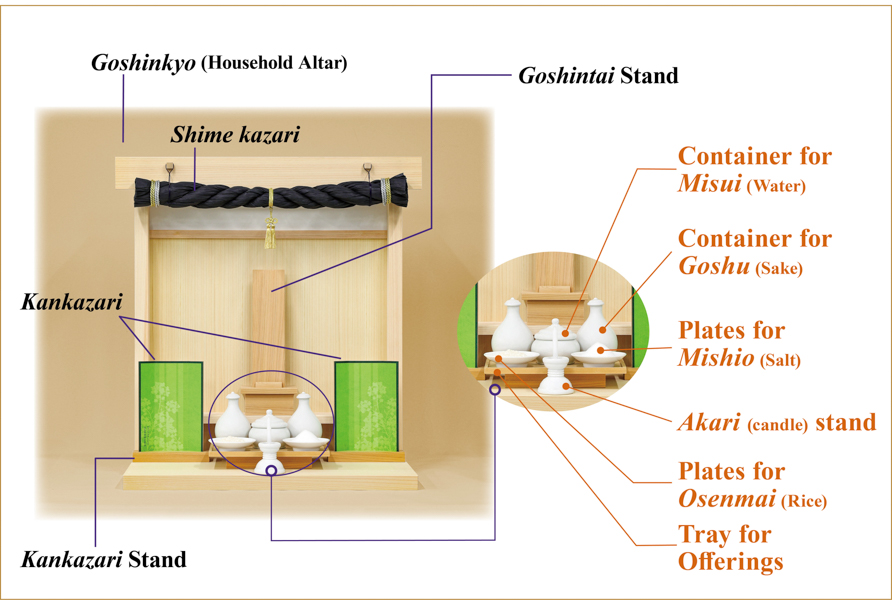
Water
Like water flowing from top to bottom, it represents an open mind. The first water of the day before using for other things is offered to Kami.
Sake
Like the good feeling one gets from drinking alcohol, it expresses the intention to live each day with a cheerful heart.
Washed Rice
Much like rice, which serves as nourishment for people, it represents a mindset of washing away one's own shortcomings and living a life of service to others.
Salt
Salt, which remains white and constant, represents a sincere heart that directs unchanging devotion toward Kami.
Light
We offer kigan to Kami by lighting a candle.
Click here for details on goshinkyo and related supplies (Japanese version only).
Care and Maintenance
The goshinkyo is wiped down daily with a dedicated cloth; care should be taken not to touch the goshintai itself during this process.